






When you’re new to working with HPLC, selecting the right column can be surprisingly challenging. An HPLC capillary column and a conventional HPLC column may look similar at first, but they can deliver different performance once integrated into a complete system. One type uses less solvent and requires smaller sample sizes, while the other is often easier to handle for routine testing. The right choice depends on your specific application, instrument configuration, and analytical requirements.
Capillary HPLC columns have a much smaller internal diameter compared to conventional analytical columns and are specifically designed for low-flow applications. Their reduced flow path minimizes mobile-phase consumption and accommodates smaller sample volumes. This makes them ideal for scenarios where samples are limited or solvent consumption needs to be minimized.
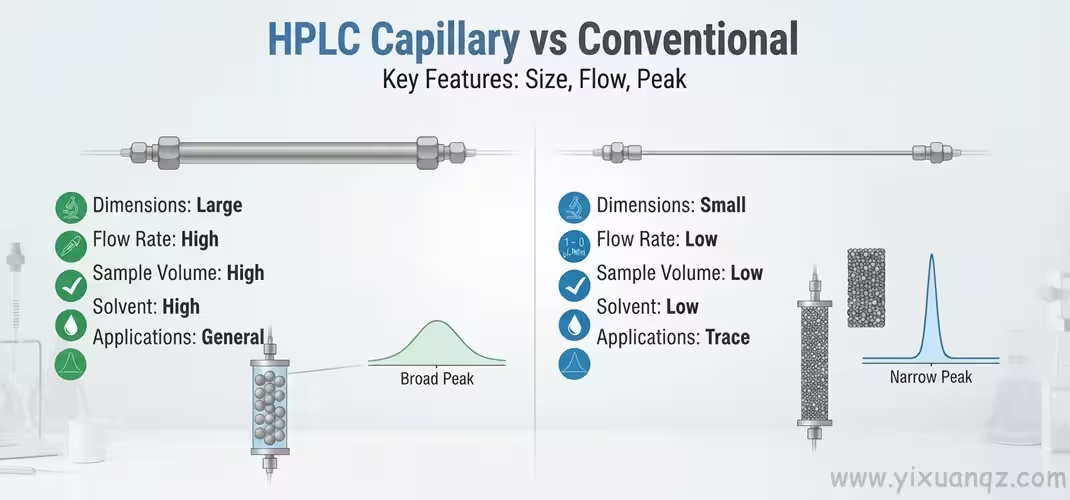
Conversely, conventional HPLC columns are commonly used for routine laboratory tasks. They come with larger internal diameters that can handle higher flow rates and sample loads, making them highly compatible with standard HPLC instruments. These columns are well-suited for pharmaceutical testing, quality control, food analysis, environmental testing, and general chemical analysis.
The column’s diameter directly influences solvent consumption and sample requirements. Capillary columns operate at much lower flow rates, which helps decrease solvent usage during analysis. They’re particularly useful when working with valuable or scarce samples. Conventional columns, on the other hand, offer more flexibility for routine testing and higher sample throughput.
Capillary columns also have benefits for certain high-sensitivity applications. Their small internal diameter can help maintain a higher analyte concentration within the flow path, making them ideal for specialized uses such as LC-MS and trace-level analyses. However, the smaller flow path means the system is more sensitive to connection quality and unnecessary dead volume.
Therefore, the quality of HPLC tubing and fittings is crucial in capillary systems. PEEK fittings, HPLC nuts, ferrules, and precision tubing need to match the column and tubing dimensions correctly. Poor connections or excessive dead volume can affect peak shape, separation efficiency, and system stability.
Choosing between capillary and conventional HPLC columns isn’t just a matter of which one is better. A capillary column may be more appropriate when low solvent consumption, small sample volumes, or high-sensitivity applications are required. A conventional column might be preferable for routine analysis, higher sample throughput, and standard HPLC systems.
Considering the entire fluidic path is also critical. The injector, tubing, fittings, column, and detector work in tandem, and the quality of each connection impacts overall system performance. Selecting an appropriate combination of column and HPLC fluidic components can help maintain stable flow and produce reliable analytical results.
If you require dependable HPLC fittings, PEEK connectors, tubing, or other fluidic components for either capillary or conventional HPLC systems, Yixuan Precision is here to assist. As a manufacturer of HPLC fittings, we offer standard products, OEM solutions, and bulk supply options for laboratories, distributors, and instrument manufacturers. Reach out to Yixuan Precision to discuss your specifications and find the right solution for your HPLC needs.